Are you weighing a starter home in Wyoming against nearby suburbs like Grandville, Jenison, or Byron Center? You want a smart first move that balances price, commute, schools, and future resale. In this guide, you’ll compare what your dollars buy in each area, how everyday life feels, and what helps when you sell later. You’ll walk away with a clear checklist to choose confidently. Let’s dive in.
Market snapshot: starter-home price picture
Here is the big-picture view first-time buyers notice most: price and pace.
- Wyoming: Redfin reports a median sale price of about $257,450 as of February 2026, with homes selling quickly in early 2026.
- Grandville: Recent snapshots show median sale prices in the low to mid $300,000s, around $332,000 in early 2026.
- Jenison: Redfin reports a median sale price of about $348,000 in February 2026.
- Byron Center: Redfin shows a higher median near $447,000 in February 2026. Some listing portals reported a higher median listing price, closer to $529,950 in late 2025, which reflects differences between listing and sold medians.
Pricing shifts month to month and portals vary in methods. Use current MLS data on the day you shop, and focus on sold medians for value.
What these price gaps mean for your budget
- Wyoming often delivers the lowest entry point, which can free up funds for updates, furniture, or savings.
- Grandville and Jenison sit in a middle band. You may find more updated properties or different neighborhood features without the Byron Center premium.
- Byron Center generally commands a higher price for newer homes, larger footprints, and suburban amenities. The trade-off is a higher monthly payment today for potentially lower near-term maintenance.
What you will find in each area
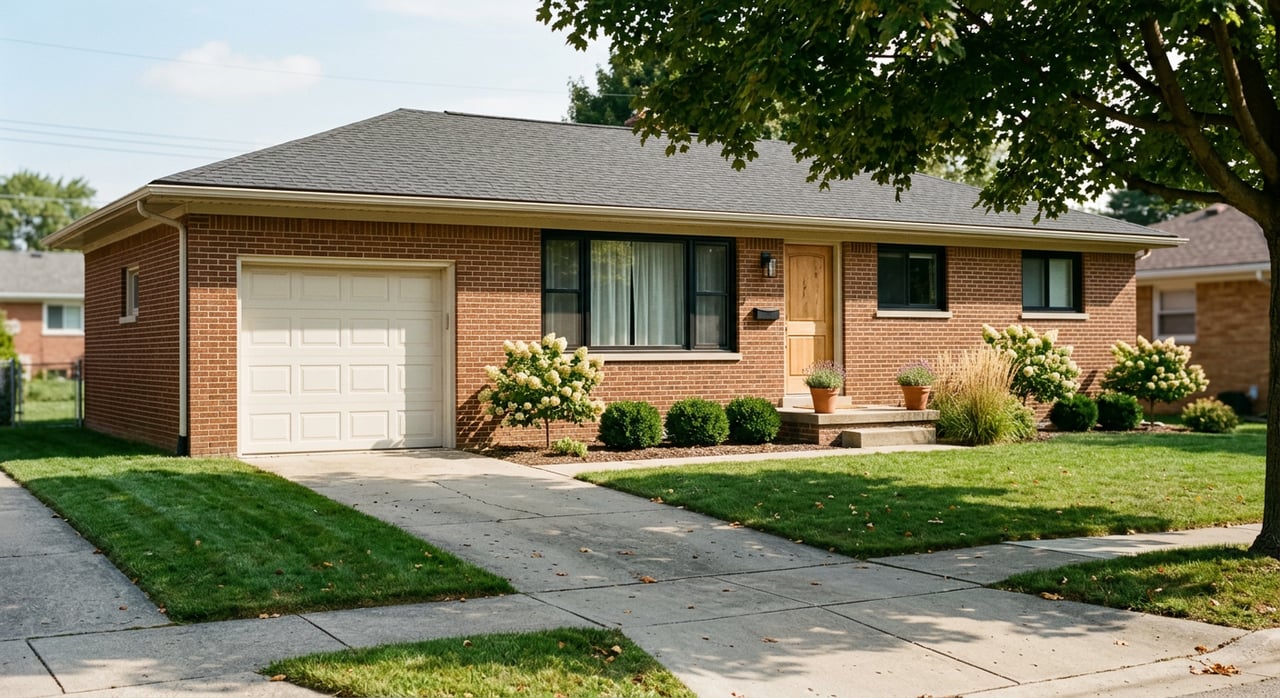
- Wyoming: A broad mix of mid-century ranches, bungalows, and modest two-story homes, often built from the 1950s through the 1970s. Starter options commonly range from about 1,100 to 1,800 square feet with 2 to 4 bedrooms.
- Grandville: A blend of post-war neighborhoods and later subdivisions. You will see modest single-family homes plus some townhome and condo options, especially near retail corridors.
- Jenison: Many ranches and split-levels from the 1960s to 1980s, a pattern tied to steady suburban growth. Single-family ownership is common, which appeals to buyers seeking established neighborhoods.
- Byron Center: More new and newer subdivisions from the 1990s to 2010s and beyond. Even “starter” homes often run 1,700 to 2,200 square feet with 3 or more bedrooms, and larger lots than central Wyoming.
Commute and daily convenience
Mean travel time to work across these communities is broadly similar, based on U.S. Census ACS estimates. Expect the following ranges:
- Wyoming: about 21 to 22 minutes
- Grandville: about 17 to 19 minutes
- Jenison: about 20 to 21 minutes
- Byron Center: about 18 to 21 minutes
On-the-ground convenience often drives daily satisfaction and resale interest:
- Grandville: RiverTown Crossings is a major anchor for shopping and dining. Explore store and event details on the RiverTown Crossings website.
- Byron Center: The Tanger Outlets draw regional shoppers and offer quick access to M-6 and US-131. Parks and trails are nearby.
- Wyoming: The 28th Street retail corridor and Rogers Plaza provide everyday services and stores. For a local overview of Rogers Plaza’s role on 28th Street, see this summary of the 28th Street corridor and Rogers Plaza.
Regional bus service exists through The Rapid on key corridors, but most first-time buyers plan for a car-based commute in these suburbs.
Schools and district overview
School-district context often influences buyer interest and resale. Keep your review neutral and fact-based, and always verify addresses against official boundary maps.
- Jenison: Served by Jenison Public Schools. Families often review district pages and independent profiles when comparing programs.
- Grandville: Served by Grandville Public Schools. For district-level indicators, some buyers reference profiles such as Grandville High School on GreatSchools.
- Byron Center: Served by Byron Center Public Schools, which many buyers research using independent sources like GreatSchools’ Byron Center overview.
- Wyoming: The city spans multiple school districts. This is an area where boundary verification matters. You can start with the city context on Wyoming, Michigan’s Wikipedia page and then confirm assignments with the relevant district.
Tip: Use each district’s site for programs and boundary tools, then compare independent profiles for additional context. Keep your notes neutral and focus on the data points that matter to you.
Resale outlook and the key trade-offs
Your first home is also an investment. Focus on features that expand your future buyer pool.
- Proximity to jobs, shopping, and transit can support demand and price resilience. National research from NAR links premiums to access near public transportation and amenities. Review the NAR report on locating near public transportation for context.
- School-district perception influences buyer interest. Many buyers look at district pages and independent indicators to compare schools. Resources like GreatSchools can help you understand program highlights and college-readiness indicators.
- Age and condition matter. Older homes in Wyoming and Grandville may offer a lower entry price but can require near-term updates, such as roofs, windows, or HVAC. Newer subdivisions in Byron Center often mean less immediate maintenance but a higher price.
- Property taxes and millages vary by municipality and district. Always get a current estimate from the local assessor or county treasurer. For example, Wyoming property tax questions are addressed by the City of Wyoming Assessor’s Office.
Bottom line: a lower entry price can be a smart value if you plan for maintenance and verify school boundaries, while a higher-priced newer home can trade for convenience, space, and perceived program strength that may attract more future buyers.
Quick comparison at a glance
Community | Median sale price (Feb 2026) | Starter-home types | Mean commute | Notable amenities |
|---|---|---|---|---|
Wyoming | About $257,450 | Mid-century ranches, bungalows, modest two-stories, 1,100–1,800 sq ft | About 21–22 minutes | 28th Street corridor, Rogers Plaza; close to broader Kentwood retail |
Grandville | Low–mid $300Ks, about $332K | Post-war neighborhoods, later subdivisions, some condos/townhomes | About 17–19 minutes | RiverTown Crossings retail hub |
Jenison | About $348,000 | 1960s–1980s ranches and split-levels, owner-occupied single-family common | About 20–21 minutes | Suburban shopping, parks, nearby trails |
Byron Center | About $447,000 | Newer subdivisions, larger single-family homes, 1,700–2,200+ sq ft | About 18–21 minutes | Tanger Outlets, M-6 and US-131 access |
Note: Market numbers shift monthly. Use a current MLS snapshot when you shop.
How to choose with confidence
Use this simple checklist to align your budget and lifestyle.
- Define must-haves vs nice-to-haves
- Bed/bath count, home size, garage, yard, and commute tolerance. Rank them by importance.
- Compare total cost, not just price
- Consider purchase price, estimated taxes, insurance, utilities, and likely near-term repairs based on age and condition.
- Test-drive the commute
- Visit during your real rush hour. Try your route to downtown Grand Rapids or your main worksite.
- Verify school boundaries and programs
- Check the district site for your address. Then read independent profiles to understand programs, graduation and readiness indicators. See Jenison Public Schools, Grandville Public Schools, and GreatSchools’ Byron Center overview. For Wyoming, confirm which district serves the parcel since boundaries cross the city.
- Map your weekly errands and recreation
- List your top five stops. Compare drive times to grocery, fitness, parks, and trail access. Grandville’s RiverTown Crossings and Byron Center’s Tanger Outlets draw many shoppers, while Wyoming’s 28th Street corridor covers everyday services.
- Plan for resale from day one
- Prioritize features many buyers want, like functional layouts, off-street parking, and proximity to amenities. Review local planning materials for nearby development that could enhance convenience over time.
Ready to explore live options and run the numbers with a steady guide? Connect with Prichard Properties for a tailored search, financial clarity, and local insights that protect your first-home purchase.
FAQs
What are typical starter-home prices in Wyoming versus Byron Center?
- Wyoming’s recent median sold price was about $257,450 in February 2026, while Byron Center’s was about $447,000 over the same period. Portals differ, so verify the latest MLS data before you shop.
What counts as a “starter home” in West Michigan suburbs?
- In Wyoming and Grandville, many starter homes run 2–3 beds and about 1,100–1,800 square feet. In Byron Center, a starter can be larger, often 1,700–2,200 square feet, due to newer subdivisions and lot sizes.
How do commute times compare among Wyoming, Grandville, Jenison, and Byron Center?
- Average commutes are similar. Expect about 17–22 minutes depending on the community, based on ACS QuickFacts ranges. Your personal route and rush hour will matter more.
How should I evaluate schools without overstepping boundaries?
- Start with district sites for programs and boundary tools, then review neutral indicators on independent profiles. See Grandville High School on GreatSchools and the Byron Center overview on GreatSchools.
What are the main lifestyle differences between Wyoming and Grandville?
- Both offer short commutes and retail access. Wyoming clusters around the 28th Street corridor and Rogers Plaza, while Grandville centers on the RiverTown Crossings retail hub, plus nearby neighborhoods and trails.
How do I estimate property taxes before I write an offer?
- Check the local assessor or county treasurer for millage and estimates based on taxable value. For example, the City of Wyoming Assessor’s Office provides guidance on assessments and tax questions.
