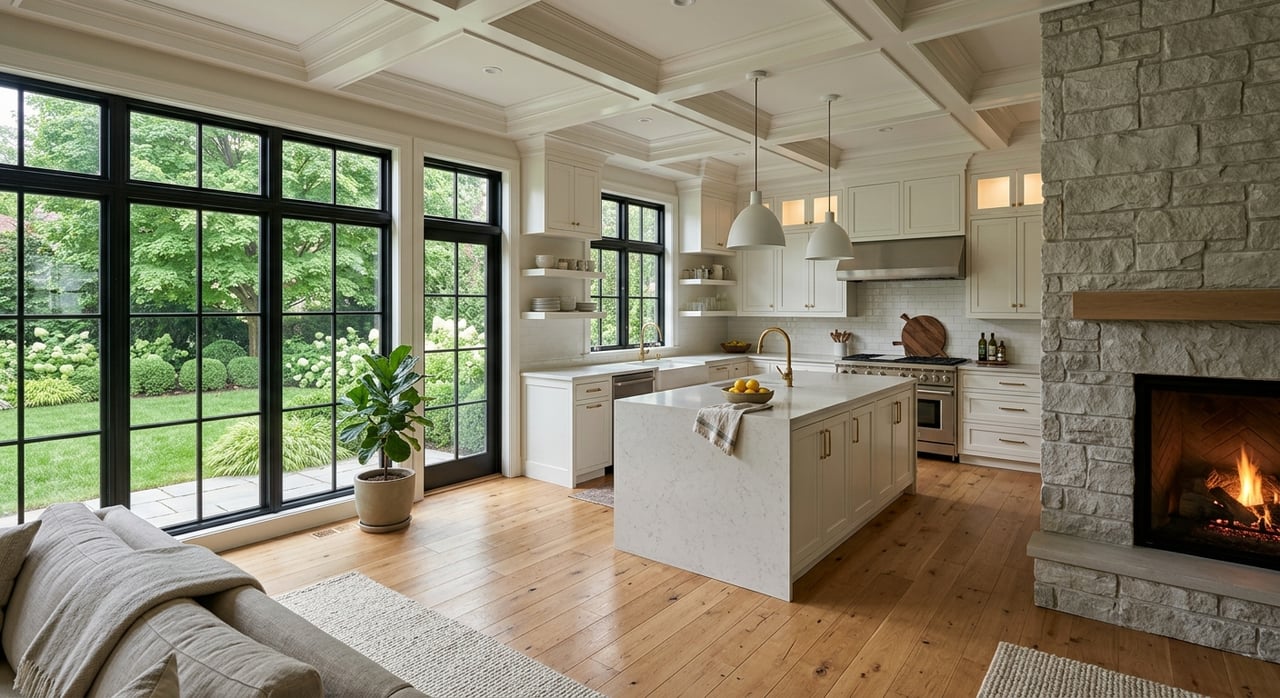
If your current home no longer fits the way you live, Grandville may be the kind of move-up market worth a serious look. Maybe you want more square footage, a different layout, easier access to trails or parks, or a setting that better matches this next stage of life. The challenge is that moving up often means balancing timing, equity, financing, and a competitive local market all at once. This guide will help you think through those decisions with more clarity so you can move forward with confidence. Let’s dive in.
Why Grandville Appeals to Move-Up Buyers
Grandville offers a small-city footprint with strong access to the broader Grand Rapids area. According to the city and Census data, Grandville covers about 7.27 square miles and had a 2020 population of 16,083, which gives it a compact feel while still offering a range of housing and lifestyle options.
For many move-up buyers, that balance is the draw. You can look for a larger home, a more functional lot, or a different daily routine without leaving the West Michigan area you already know. In a market like this, your goals often come down to space, convenience, and long-term fit.
Grandville Market Snapshot
If you are planning to move up in Grandville, speed matters. Redfin’s Grandville housing market data reported that in February 2026, the median sale price was $383,700, prices were up 18.1% year over year, and homes had a median of 6 days on market.
At the same time, Realtor.com’s Grandville market report showed 32 homes for sale, a median list price of $428,200, a median of 43 days on market, and a 100% sale-to-list ratio in February 2026. It also labeled Grandville a seller’s market.
These figures measure different things, so they are not direct apples-to-apples comparisons. Still, taken together, they point to a market where well-priced homes can move quickly, and where move-up buyers may need to be ready before their current home is fully sold.
What “Move-Up” Really Means
A move-up purchase is not only about buying a larger house. It usually means you are trying to improve how your home supports your daily life, while also making a financially sound step from one property to the next.
You may be looking for:
- More bedrooms or flexible living space
- A larger yard or different lot setup
- Better access to parks, trails, or downtown amenities
- A home that works better for remote work, guests, or hobbies
- A location that feels more aligned with your next chapter
That is why the best move-up plan starts with both lifestyle goals and budget realities. In Grandville, those two pieces are closely connected.
How to Evaluate Grandville Areas
Grandville’s zoning map can be a practical tool when you are trying to narrow down what kind of setting fits you best. While zoning is not a ranking of neighborhoods, it does offer useful clues about the character and pattern of different parts of the city.
Traditional residential settings
According to the city’s zoning ordinance, PB Prairie/Barrett is described as a quiet single-family residential setting. OW Oakes/White is intended to protect residential character while allowing a mix of densities and housing types. For move-up buyers who want more traditional residential streets and a quieter feel, these areas may be worth closer attention.
Mixed-use and walkable areas
The city describes the CBD downtown district as a small-town core with retail, offices, entertainment, public space, and residential uses. The O Ottawa and NW North Wilson districts are mixed-use corridors, and the 28th Street district is intended as a mixed-use boulevard with retail, office, and upper-floor residential uses.
If your move-up goals include convenience, errands closer to home, or a more connected day-to-day rhythm, these areas may align better with how you want to live. That interpretation is based on the city’s stated zoning intent.
Parks, Trails, and Outdoor Access
When you move up, the home itself is only part of the decision. The spaces around it matter too, especially if you want easier access to outdoor recreation or prefer to trade a larger yard for nearby public amenities.
Grandville’s parks plan identifies neighborhood parks such as Wedgwood Park, Heritage Park, and Calvin Crest Park. It also highlights natural resource areas including Mill Race Park, the Grand River Waterfront, and the Grand River Pathway, along with Buck Creek Trail as a linear park connection to the Kent Trail System.
For some buyers, that means prioritizing a home near trails or parks over maximizing lot size. For others, it means looking for the right combination of indoor space, outdoor space, and recreation access.
School District Questions to Verify Early
If school assignment is part of your search, it is smart to verify that information early in the process. Grandville Public Schools states that it serves the greater Grandville area as a YK-12 district with seven elementary schools, one intermediate school, one middle school, and one high school.
The district also notes that attendance zones shown on its map are not exact. If a specific address matters to your move, confirm details using property tax records or the county property search tools before you make an offer decision.
How Much Equity Do You Need?
This is one of the most common move-up questions, and there is no single public benchmark that applies to everyone. What matters is whether your sale proceeds, after paying off your current mortgage and transaction costs, leave enough room to support your next purchase.
As the CFPB’s homebuying guidance makes clear, your planning should account for more than the next down payment. You also need to consider your mortgage payoff, closing costs, moving expenses, reserves, and whether temporary financing may be needed.
The CFPB says closing costs typically range from 2% to 5% of the purchase price, not counting the down payment. That is why move-up budgeting needs to look at the full picture, not just the sale price of your current home.
Buy First or Sell First?
In many cases, the CFPB says people who want to move usually try to sell their current home first before buying another one. That approach can reduce financial pressure and give you a clearer sense of what funds you will actually have available.
Still, every move-up situation is different. In a competitive market like Grandville, some buyers consider buying before their current home closes so they do not miss the right property.
When selling first may help
Selling first may make sense if you want to:
- Know your exact available equity
- Limit the risk of carrying two housing payments
- Keep your financing simpler
- Strengthen your confidence when setting a purchase budget
When buying first may be possible
Buying first can work in some cases, but the financing bar is higher. Fannie Mae’s guidance on bridge or swing loans says this type of financing can be an acceptable source of funds if the lender documents your ability to carry the new home, the current home, the bridge loan, and your other obligations.
That means this path is less about preference and more about documented capacity. If you are considering it, review the payment impact carefully before you move ahead.
Why Preapproval Matters More for Move-Up Buyers
In a market where homes can move fast, preapproval is not optional. The CFPB explains that sellers often require a preapproval letter before accepting an offer.
The same CFPB guidance also notes that a preapproval letter is only a tentative willingness to lend, not a guaranteed loan offer. It also often expires after 30 to 60 days, so timing matters if your home search and sale timeline stretch out.
For move-up buyers, this is especially important because you may be coordinating two major transactions at once. The CFPB also recommends that you do not wait until you find a home to think about financing, and that you compare official loan offers rather than assume one lender is best.
Michigan Tax Rules Worth Knowing
If you are moving from one principal residence to another in Michigan, tax rules may affect your timing. Michigan’s Principal Residence Exemption exempts an owner’s principal residence from local school operating millage, up to 18 mills.
To claim it, the owner files Form 2368 with the local assessor. When the property is no longer your principal residence, Form 2602 generally must be filed within 90 days.
Michigan also allows a conditional rescission of PRE in certain cases. This can allow a homeowner to keep the PRE on the former home for up to three years if the property is not occupied, is for sale, is not leased, and is not used for business purposes, with annual verification.
For move-up buyers trying to buy before the old home closes, that is one of the more relevant public rules to review early. It does not replace legal or tax advice, but it can help you ask better timing questions.
A Smart Move-Up Strategy for Grandville
If you are planning a move-up purchase in Grandville, a steady and well-prepared approach usually wins over a rushed one. A strong plan often looks like this:
- Review your current mortgage payoff and likely sale proceeds.
- Build a full budget that includes down payment, closing costs, moving costs, and reserves.
- Get preapproved early and track the expiration date.
- Decide whether selling first or temporary financing is the better fit.
- Narrow your search based on the kind of daily lifestyle you want in Grandville.
- Verify address-specific details, especially if district boundaries or tax questions matter to you.
The goal is not just to buy a bigger house. The goal is to make a thoughtful move that fits both your finances and your life.
Final Thoughts
Grandville gives move-up buyers a lot to think about in a relatively compact market: competitive conditions, varied living patterns, solid park and trail access, and location advantages within the greater Grand Rapids area. If you prepare early, understand your equity picture, and match your home search to how you actually want to live, you can make a stronger move with fewer surprises.
If you are weighing your next step in Grandville and want clear, financially grounded guidance, Prichard Properties can help you think through timing, strategy, and what a smart move-up plan looks like for your goals.
FAQs
What is the Grandville, MI housing market like for move-up buyers?
- Grandville appears to be a competitive market. Redfin reported a February 2026 median sale price of $383,700, 18.1% year-over-year price growth, and 6 median days on market, while Realtor.com reported 32 homes for sale, a median list price of $428,200, 43 median days on market, and a 100% sale-to-list ratio.
How much equity do you need to move up to a home in Grandville, MI?
- There is no single required amount. You need enough expected sale proceeds to cover your current mortgage payoff, your next down payment, closing costs, moving expenses, and any reserves or temporary financing needs.
Should you buy before you sell when moving up in Grandville, MI?
- Public CFPB guidance says many people sell first before buying another home, but buying first may be possible if a lender is comfortable that you can carry the payments for both homes and any bridge financing.
Which Grandville, MI areas may fit different move-up buyer goals?
- Based on Grandville’s zoning descriptions, PB Prairie/Barrett and OW Oakes/White may appeal to buyers looking for a more traditional residential setting, while the CBD, O Ottawa, NW North Wilson, and 28th Street districts may be more relevant for buyers who want mixed-use convenience and a more walkable pattern.
What parks and trails should move-up buyers know in Grandville, MI?
- Grandville’s parks plan identifies Wedgwood Park, Heritage Park, Calvin Crest Park, Mill Race Park, the Grand River Waterfront, the Grand River Pathway, and Buck Creek Trail as notable public recreation assets to consider during your search.
What should buyers verify about Grandville, MI school attendance areas?
- Grandville Public Schools says attendance zones shown on its map are not exact, so if school assignment is important to your move, verify a specific address using property tax records or county property search tools before making a purchase decision.
